

Three steps to a printed page
-
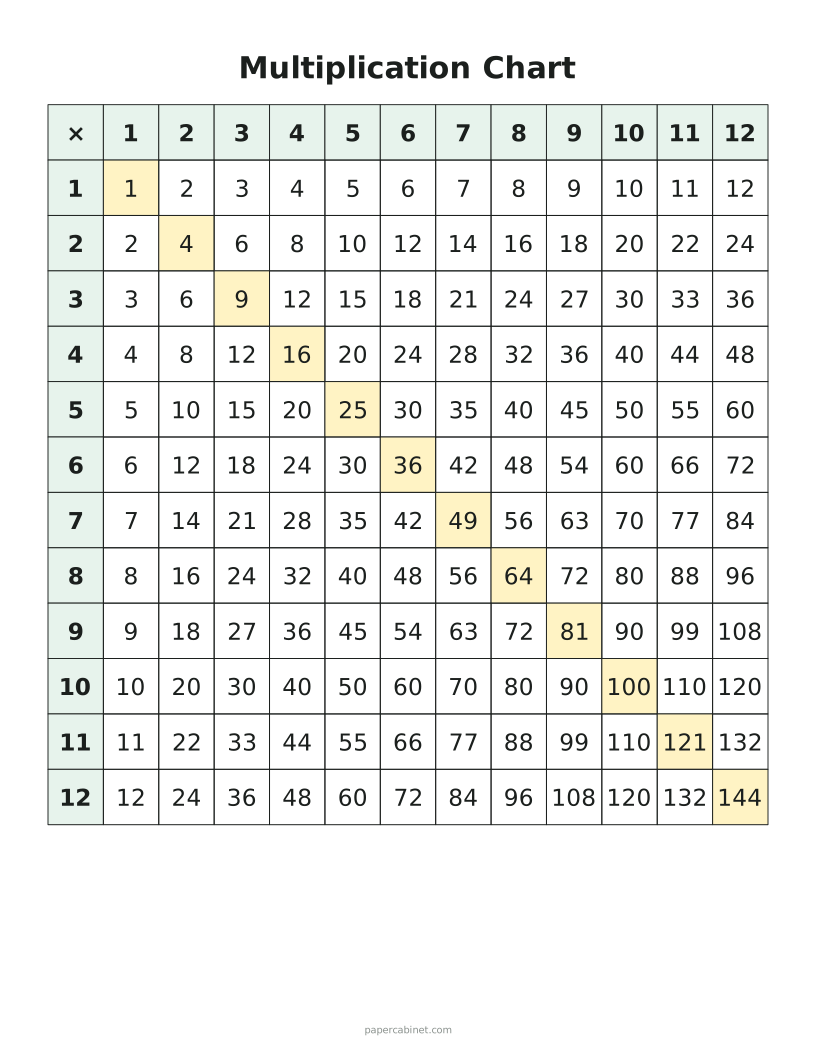
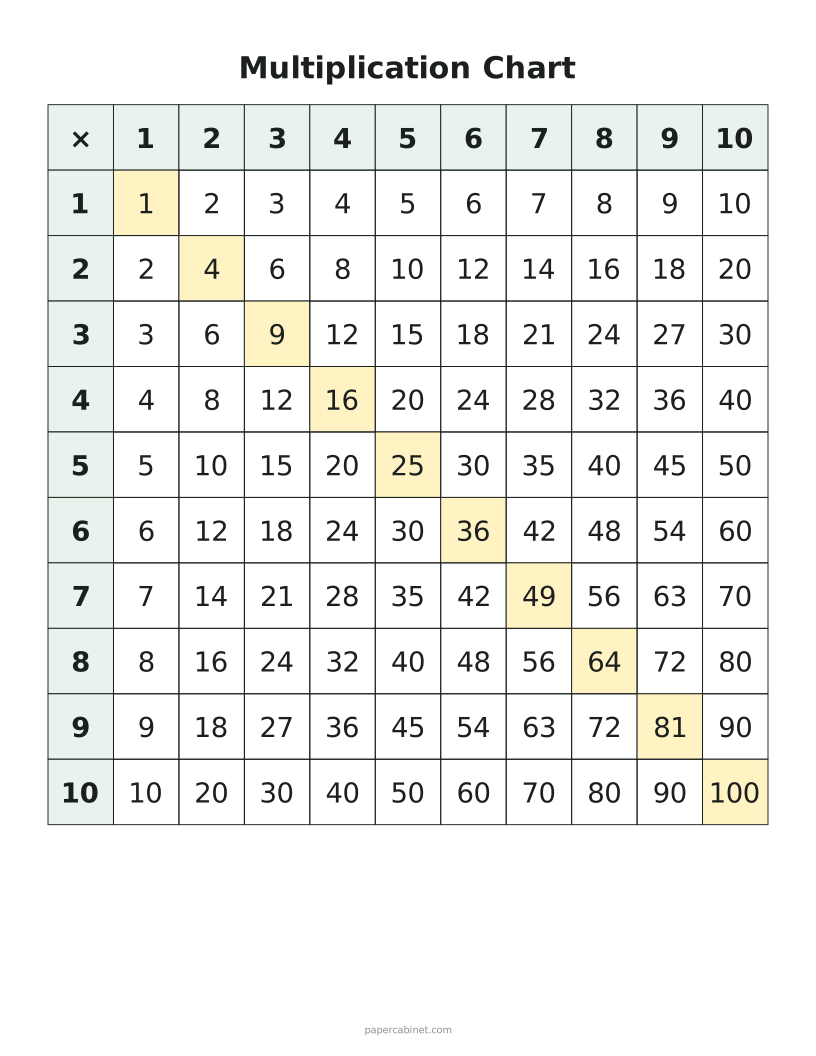
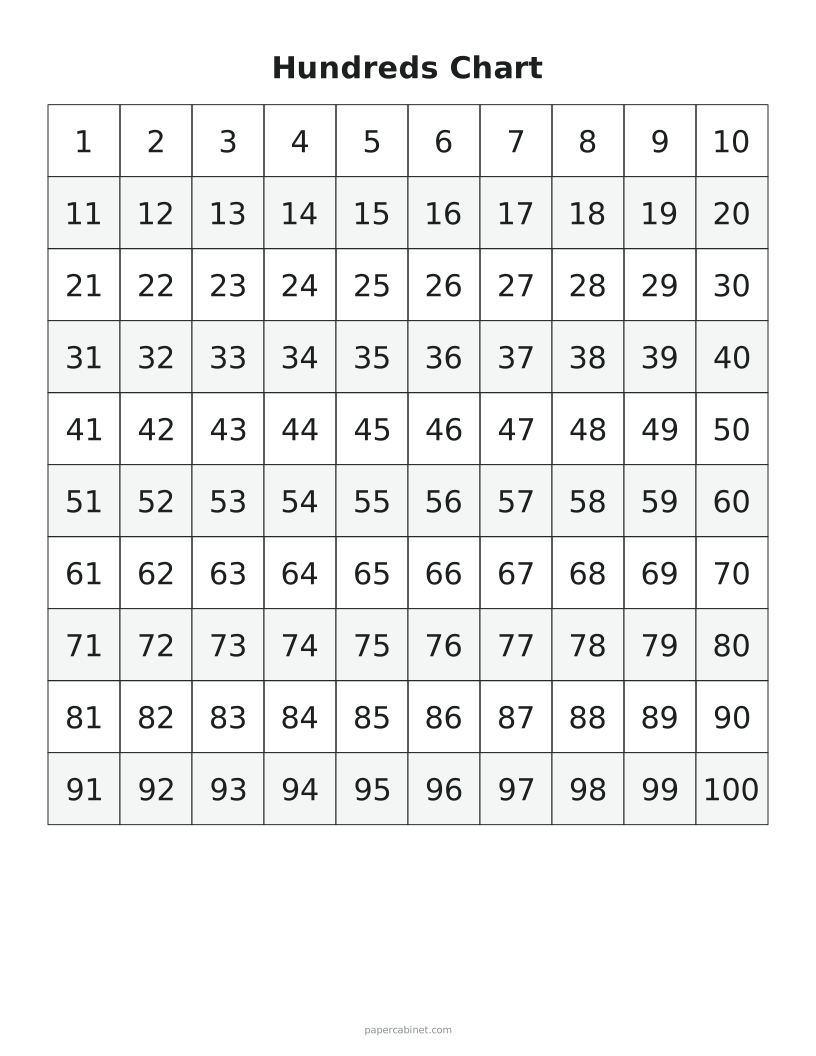
Choose a multiplication chart or a hundreds chart, and its size.
-
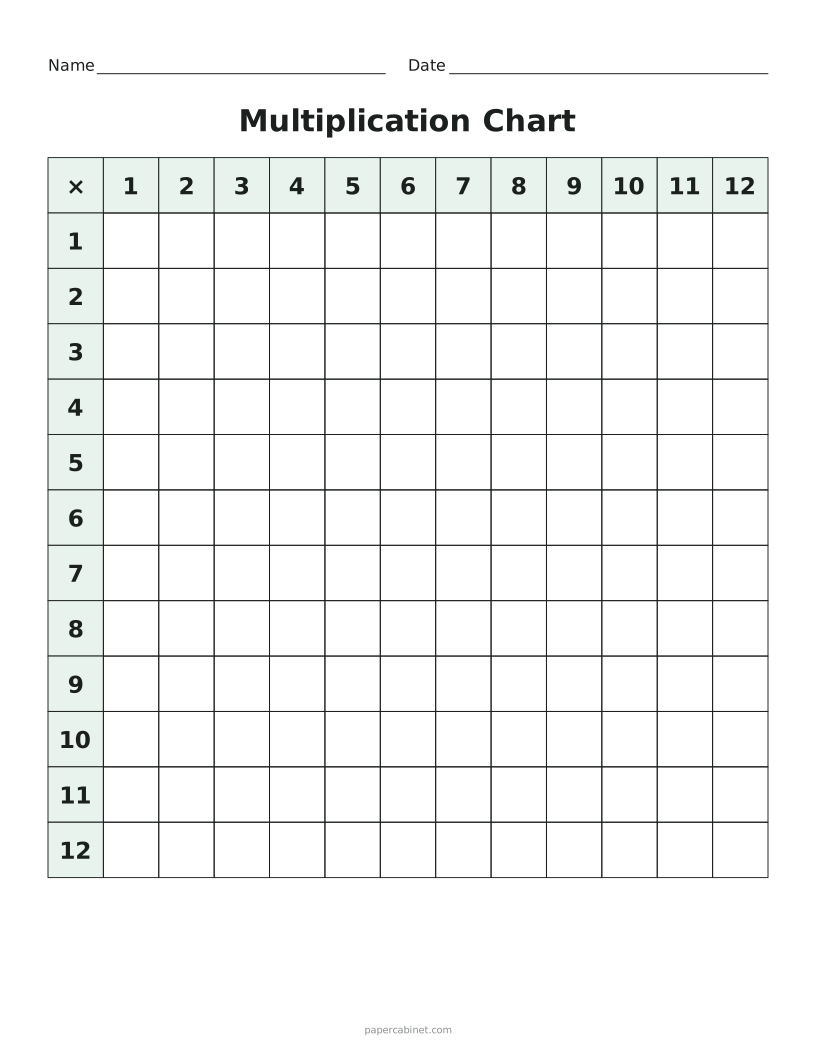
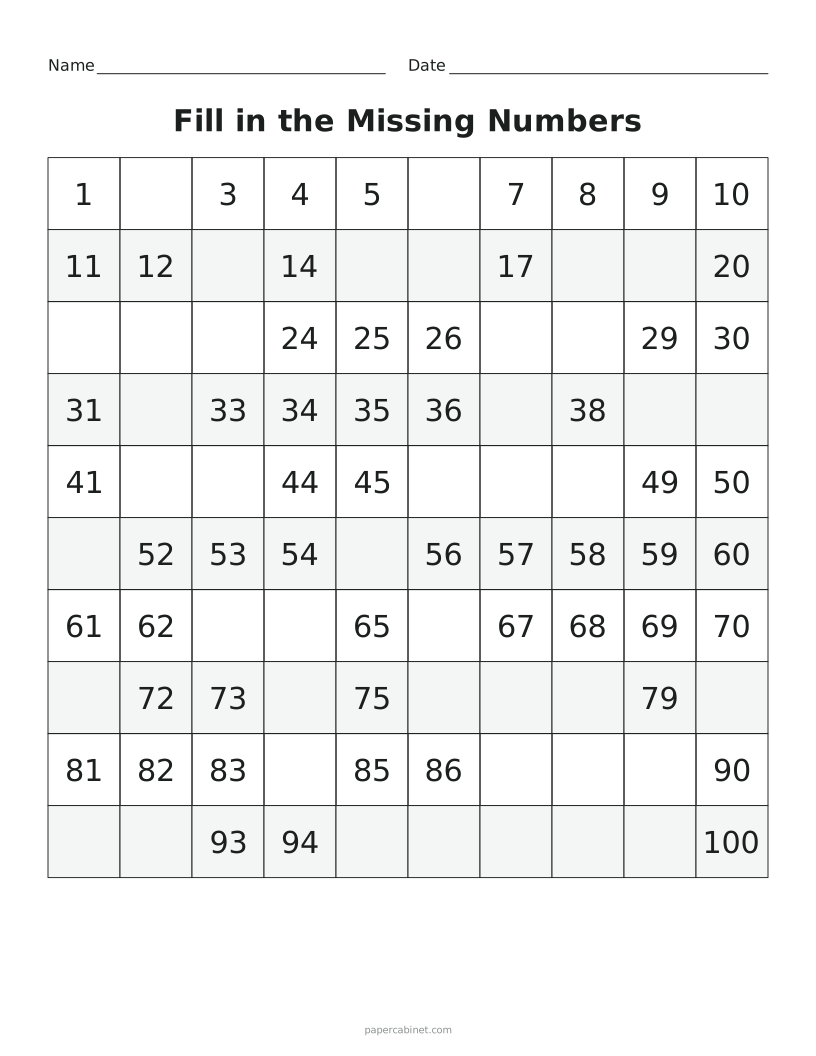
Leave every number showing, or hide some or all of them for fill-in practice.
-
Press Print. Shuffle gives a different set of blank squares.
Frequently Asked Questions
Should I use a 10 × 10 or 12 × 12 chart?
Start with 10 × 10 for second and third grade. Move to 12 × 12 when the class starts on the 11s and 12s.
What size multiplication chart do schools use?
Most US schools use 12 × 12. A 10 × 10 chart is common for younger grades, and 15 × 15 is useful for extra challenge.
What is a 120 chart?
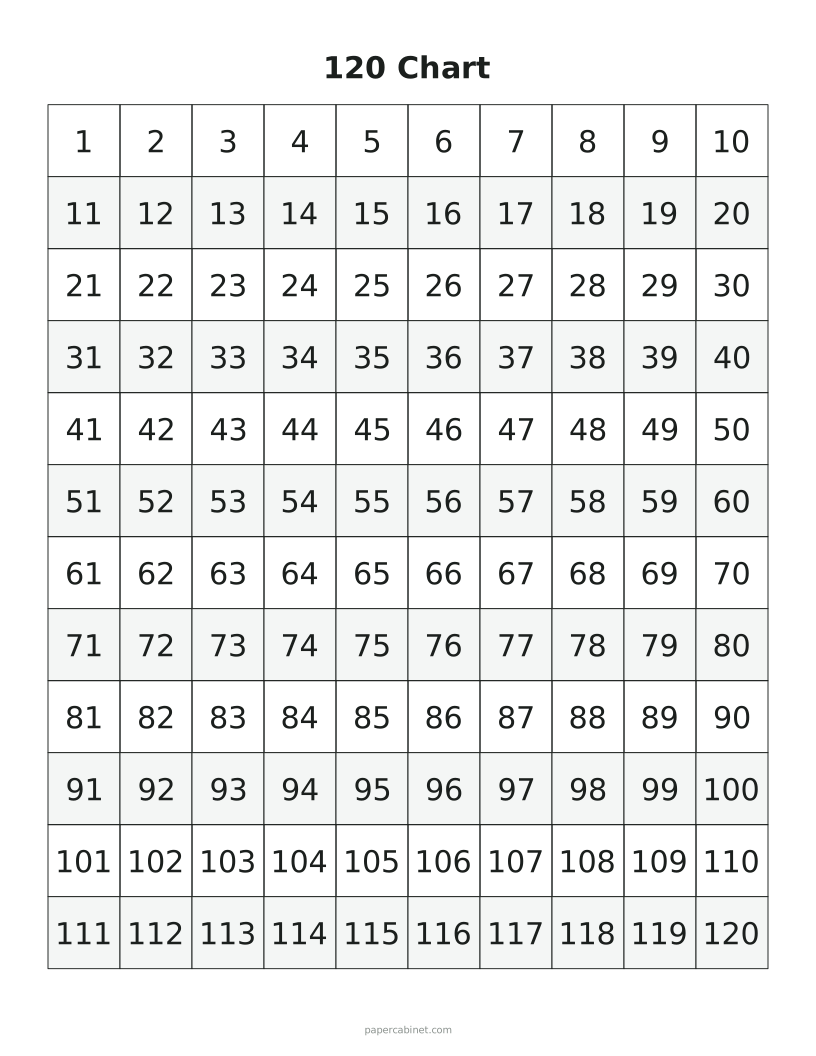
A hundreds chart that keeps going to 120, so kids practise counting past 100, which is a first-grade standard in many states.
Can I print a blank hundreds chart?
Yes. Choose Hundreds, then "Blank" under fill-in practice for an empty 10 × 10 grid.